Whitney Wetsig
A mobile medical documentation tool developed by Air Force Research Laboratory researchers is now deployed and being tested on Maryland State Police medevac helicopters. This marks the first time medical providers are using Battlefield Assisted Trauma Distributed Observation Kit (BATDOK) to document and transfer civilian patients in the U.S.
Maryland State Police flight paramedic crews are using the AFRL-developed tool alongside their standard toolset as they transport injured patients to hospitals for shock trauma treatment.
BATDOK, a mobile application that helps medics monitor patients, complete documentation and provides decision-support capabilities, streamlines patient care and optimizes patient delivery to medical facilities, resulting in more efficient and potentially life-saving care.
“We are proud to deliver this technology to military and now civilian medics, helping to save lives on the battlefield and beyond," said Brig. Gen. Robert Bogart, 711th Human Performance Wing commander. “This capability is a direct result of the powerful synergy between our engineers, operational users and medical professionals within the 711th Human Performance Wing.”
With seven helicopter bases located in Maryland, about 2,000 patients are transported on these medevac helicopters per year.
“Partnering up with the civilian sector can help us identify and possibly expose what is a developing capability to more use cases and scenarios,” said Dr. Gregory Burnett, lead engineer for AFRL’s 711th Human Performance Wing product development branch, Human Effectiveness Directorate. “That exposure can further accelerate its overall development. This supports our goal to not only develop enabling technologies for the Air Force, but to transition that capability to a larger network of U.S. stakeholders.”
AFRL researchers said this latest testing came about due to observations of BATDOK’s usefulness in military environments, and the hope that the tool would be beneficial in civilian use cases.
“The Maryland State Police saw this capability from their partnership with the C-STARS program and wanted to use BATDOK to save lives and gather information,” Cantu said, noting that “the civilian impact of BATDOK can be just as much, if not more than the military application.”
The testing will be completed under a phased approach with the first phase focused on building the infrastructure to field BATDOK to the Maryland State Police and start streaming data. The tests will begin in Baltimore and then will be rolled out statewide.
“The Maryland State Police medevac system covers a wide range so this will give us the ability to capture data from a lot of patients,” Cantu said.
Maryland State Police flight paramedics and University of Maryland Shock Trauma staff received initial training at the C-STARS Baltimore simulation lab. The AFRL team shared user manuals and installation guides with Maryland State Police and did consultations, but they also plan to do follow-on training as they advance to the next phases of testing.
“This is yet another application of our teams coming together and impacting the lives in the medical space,” Kirsh said. “We're advancing the capability for our Air Force, but we're also advancing the capability for the broader community.”
The AFRL team emphasized that both organizations benefit from this testing arrangement.
“Maryland State Police provides us an opportunity to test and collect pre-hospital data, but it benefits them by improving their overall care chain as well,” Burnett said.
About AFRL
The Air Force Research Laboratory (AFRL) is the Department of the Air Force’s primary scientific research and development center and one of six centers within Air Force Materiel Command. AFRL plays an integral role in leading the discovery, development and integration of affordable warfighting technologies for our air, space and cyberspace forces. With a workforce spanning across nine technology areas and 40 other operations around the globe, AFRL provides a diverse portfolio of science and technology ranging from fundamental to advanced research and technology development. For more information, visit afresearchlab.com.
AFRL’s Human Effectiveness Directorate is part of the 711th Human Performance Wing, a unique combination of two mission units. While the Human Effectiveness Directorate is science- and technology-focused, the U.S. Air Force School of Aerospace Medicine is a center for aerospace medical learning, consultation, medical investigations and aircrew health assessments. This synergy of research and development with aerospace medical expertise helps ensure Airmen and Guardians are available, ready and performing at their peak.
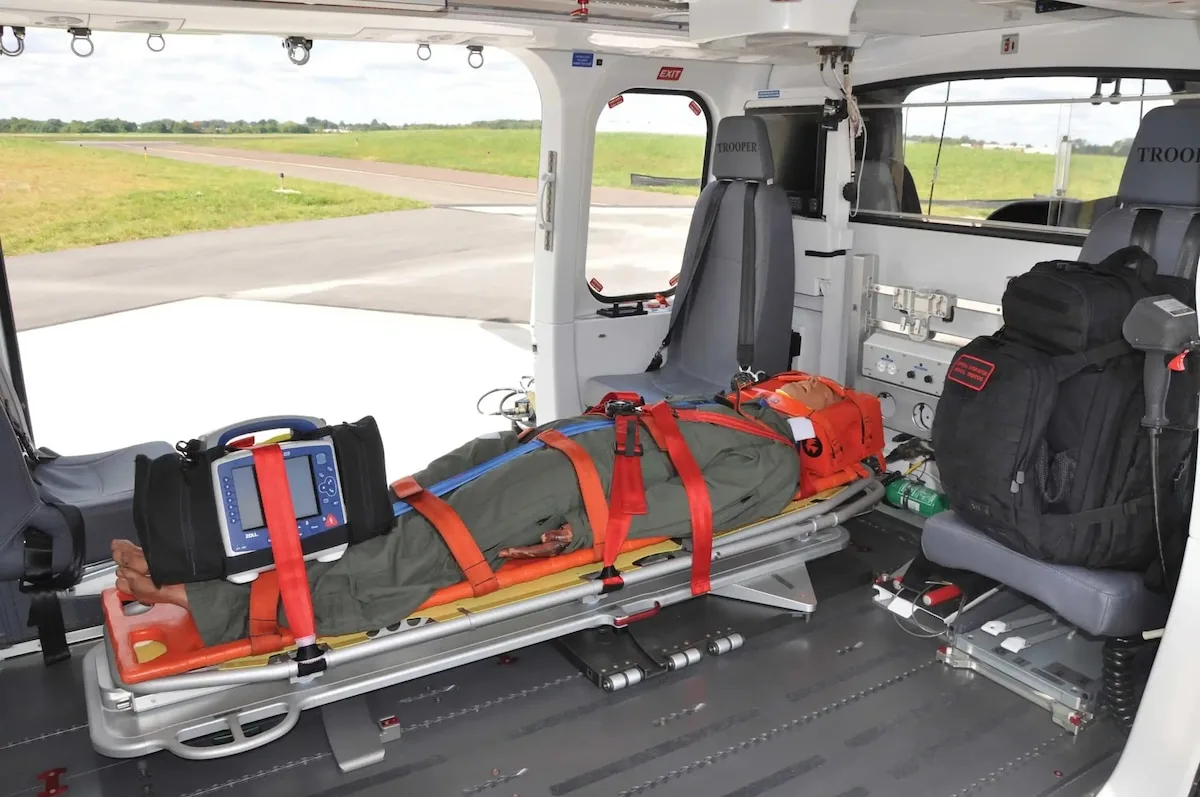
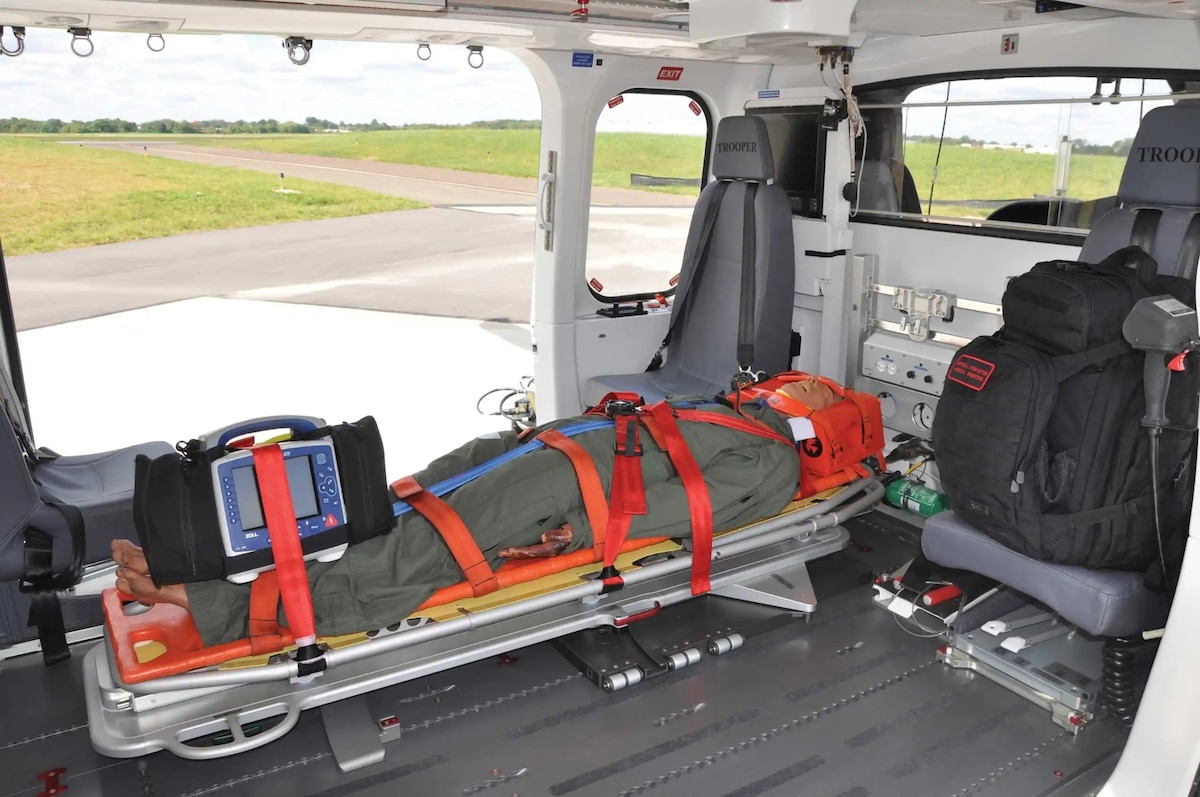
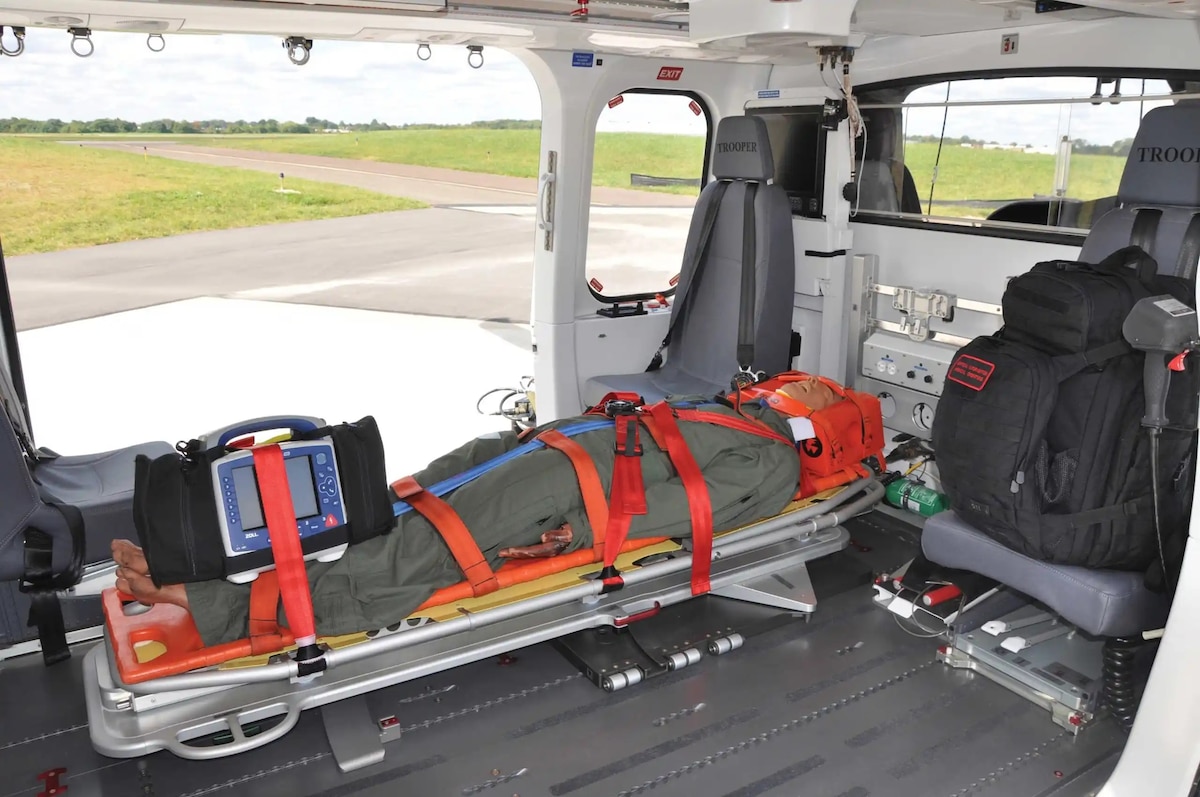 A simulated patient on a gurney sits on a Maryland State Police medevac helicopter in Baltimore, Maryland. A mobile medical documentation tool developed by Air Force Research Laboratory researchers is being tested by Maryland State Police flight paramedic crews, marking the first time that the Battlefield Assisted Trauma Distributed Observation Kit is used to document and transfer civilian patients in the U.S. (Courtesy photo by Maryland State Police)
  A Maryland State Police medevac helicopter sits in a hanger in Baltimore, Maryland. A mobile medical documentation tool developed by Air Force Research Laboratory researchers is being tested by Maryland State Police flight paramedic crews, marking the first time that Battlefield Assisted Trauma Distributed Observation Kit is used to document and transfer civilian patients in the U.S. (Courtesy photo by Maryland State Police)
 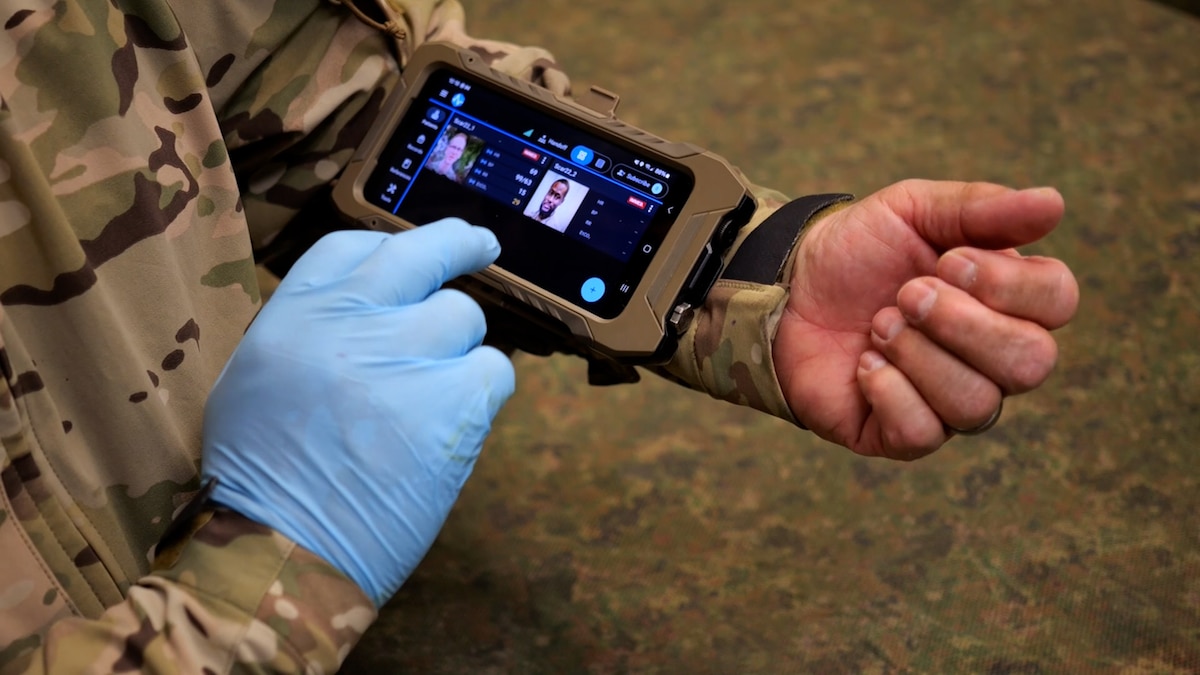 An Airman uses a mobile medical documentation tool called Battlefield Assisted Trauma Distributed Observation Kit during a demo at Wright-Patterson Air Force Base, Ohio, Jan. 28, 2025. Researchers with the Air Force Research Laboratory’s 711th Human Performance Wing developed this application to improve battlefield care. After extensive military testing, BATDOK is being tested by Maryland State Police flight paramedic crews as they transport injured civilian patients to hospitals. (U.S. Air Force photo by Keith Lewis)
 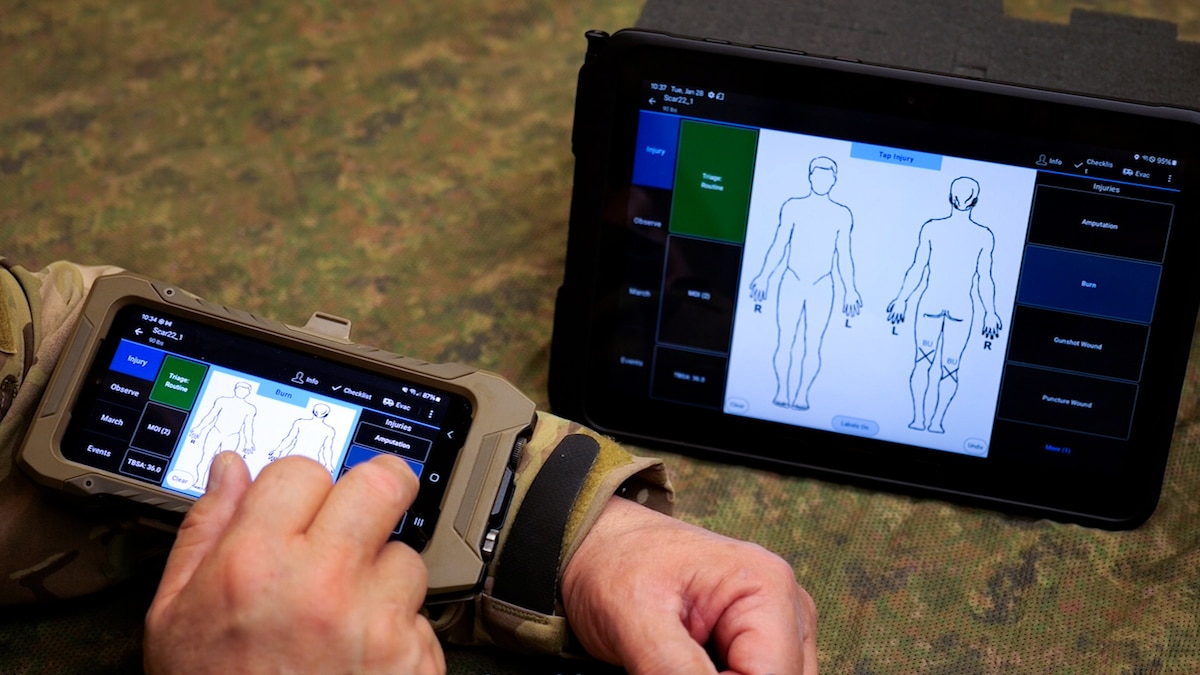 An Airman uses a mobile medical documentation tool called Battlefield Assisted Trauma Distributed Observation Kit during a demo at Wright-Patterson Air Force Base, Ohio, Jan. 28, 2025. Researchers with the Air Force Research Laboratory’s 711th Human Performance Wing developed this application to improve battlefield care. After extensive military testing, BATDOK is being tested by Maryland State Police flight paramedic crews as they transport injured civilian patients to hospitals. (U.S. Air Force photo by Keith Lewis)
 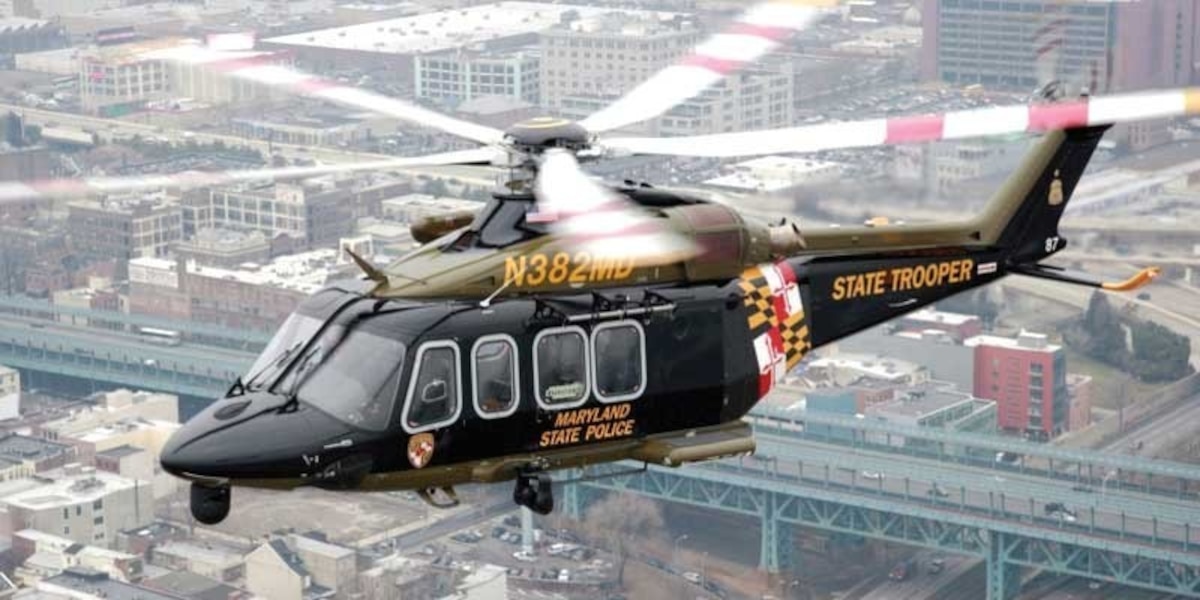 A Maryland State Police medevac helicopter transports a patient to the R Adams Cowley Shock Trauma Center in Baltimore, Maryland. A mobile medical documentation tool developed by Air Force Research Laboratory researchers is being tested by Maryland State Police flight paramedic crews, marking the first time that Battlefield Assisted Trauma Distributed Observation Kit is used to document and transfer civilian patients in the U.S. (Courtesy photo by Maryland State Police)