
Lisa Gonzales
The winter season will soon be here, have you done what needs to be done to prepare for it? The use of risk management on and off duty is vital to keeping you, your loved ones and teammates safe.
According to the National Climate Assessment, tracking evidence of an increase in both storm frequency and intensity during the cold season since the 1950’s, with storm tracks having shifted slightly towards the poles. Severe storms across the country wreak havoc, from white out blizzards, sleet and ice storms, to tornadoes, and hurricanes.
No matter where you live, storms are inevitable. The key to safely weathering them is planning and preparation. One way to prepare is to build an emergency plan for your family and practice it often. Identify responsibilities for each member of your household and work together as a team, and be familiar with natural disaster risks in your area.
In 2024, according to the Centre for Research on the Epidemiology of Disasters and USAID, 393 natural disasters occurred around the globe and impacted 167.2 million people and resulted in 16,753 fatalities.
With this knowledge, building an emergency kit for your local area with at least a 3-day supply for evacuation, 2-week supply for home will keep you ready for the unexpected.
The kit should include at a minimum:
- Water: one gallon per person, per day
- Food: non-perishables, easy to prepare and also include a manual can opener
- Flashlight with extra batteries
- Prescription medication (7–14-day supply), medical items with medication list, pertinent medical information, proof of address, deed/lease to home, passports, birth certificates, insurance policies
- Battery-powered or hand-crank radio
- First aid kit
- Extra cash
- Cell phones with chargers
- Map(s) of the area
- Sanitation and personal hygiene items
- Emergency blanket
- Pet supplies (collar, leash, ID, food, bowl and carrier)
- Baby supplies (diapers, wipes, clothing, formula, baby food)
Another challenge during the winter season is traveling for the holidays. Whether driving or flying, it can become stressful if you don’t prepare ahead of time. By maintaining your vehicle year-round should keep it running smoothly when you travel. Another way to stay prepared for inclement weather is by having blankets, jackets and warm clothing already packed, and don’t forget the emergency kit:
- First aid kit (bandages, gauze, antiseptic wipes/ointment, adhesive tape, scissors, pain relievers, tweezers)
- Jumper cables
- Flashlight with extra batteries
- Flares or reflective triangles
- Spare tire with a jack and lug wrench
- Tire inflator
- Cell phone charger
- Basic tool kit (multi-tool, screwdrivers, pliers and a knife at a minimum)
- Water and snacks
Getting plenty of rest before embarking on a road trip, but if you start to feel tired or sleepy when driving pull over to a safe location and rest or get a hotel room.
If you decide to fly instead, purchasing your tickets early is more cost effective. Try to arrive at the airport 2 to 3 hours ahead of your departure time, the more time you have the less stress you feel, and pack games, books or tablets for yourself and the kids to help you pass the time.
Sleep deprivation or fatigue when working or traveling can be detrimental. When you don’t sleep enough, or you aren’t getting good, quality sleep is called sleep deprivation. Sleep deprivation affects the body and causes difficulty thinking and being logical, slower reaction times, and mood changes. Sleep deprivation or fatigue can result in injuries or worse, death if you are too tired to perform your duties correctly. A missed tool in an intake can cause catastrophic damage or falling asleep at the wheel while on patrol or traveling to visit family.
For many adventurous souls the season calls to them but before venturing out to experience the multitude of winter activities, remember to do a risk assessment before you participate. Make sure you have the proper skill level, the correct fitting gear and most importantly make sure someone knows where you will be heading, better yet take a buddy with you. Be sure to stretch beforehand to warm up your muscles, this can alleviate injuries.
“The Winter holiday season is a time to unwind whether on the slopes or with family and friends.” said William “Bill” Walkowiak, chief of Occupational Safety, Air Force Safety Center. “I want every Airmen, Guardian and civilian to enjoy their much-needed time off but remember to do it safely and return re-energized and mission ready.”
For more information: https://www.safety.af.mil/Divisions/Occupational-Safety-Division/Winter-Safety/
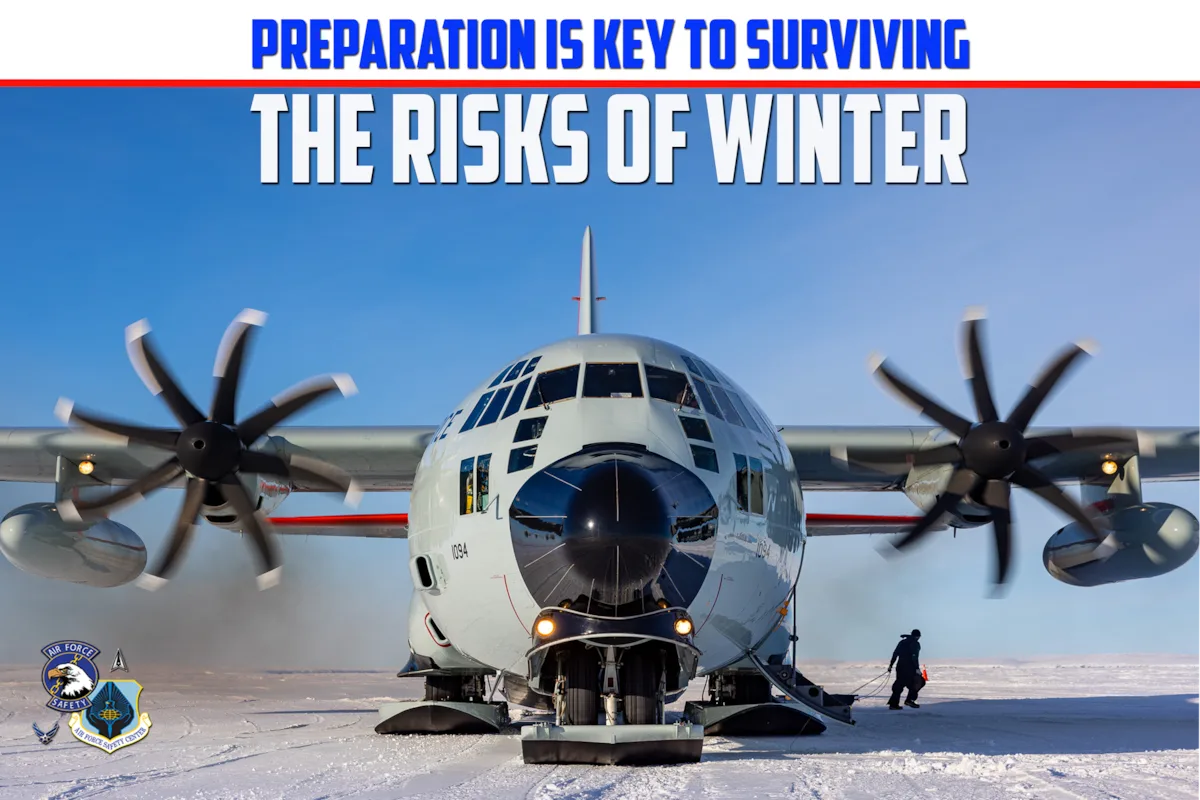
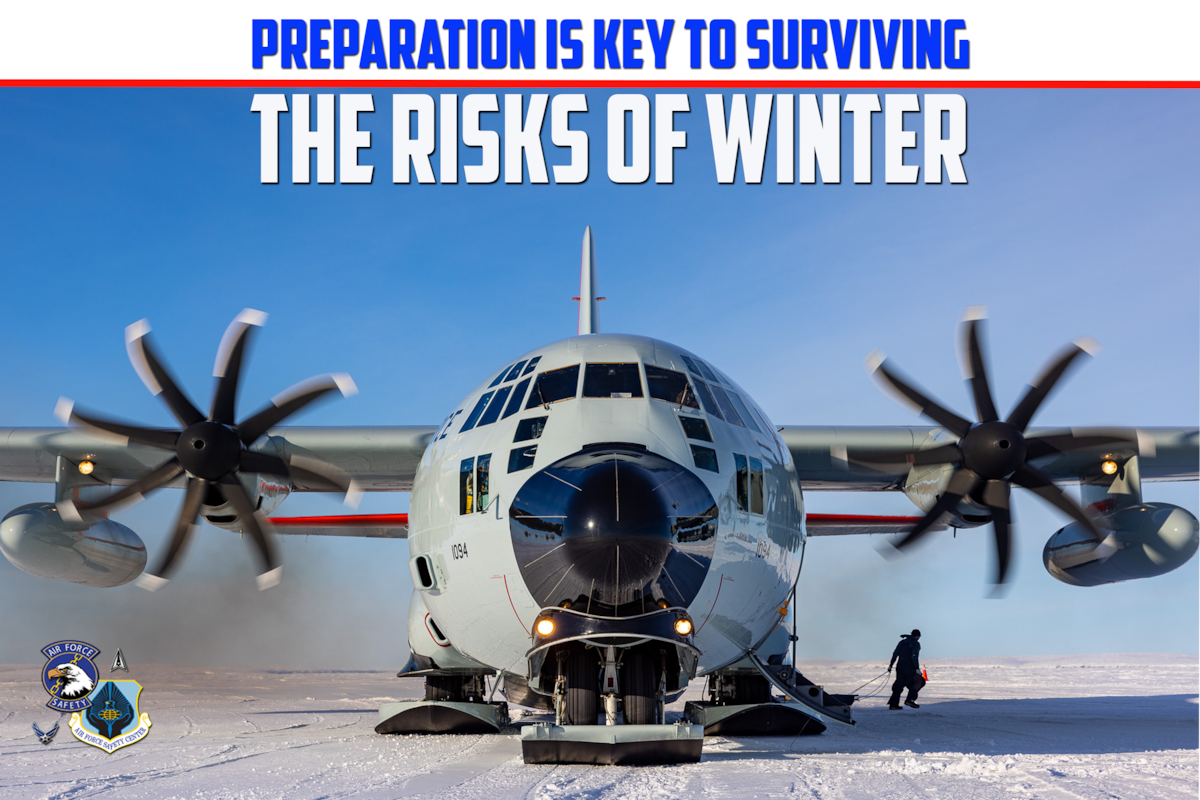
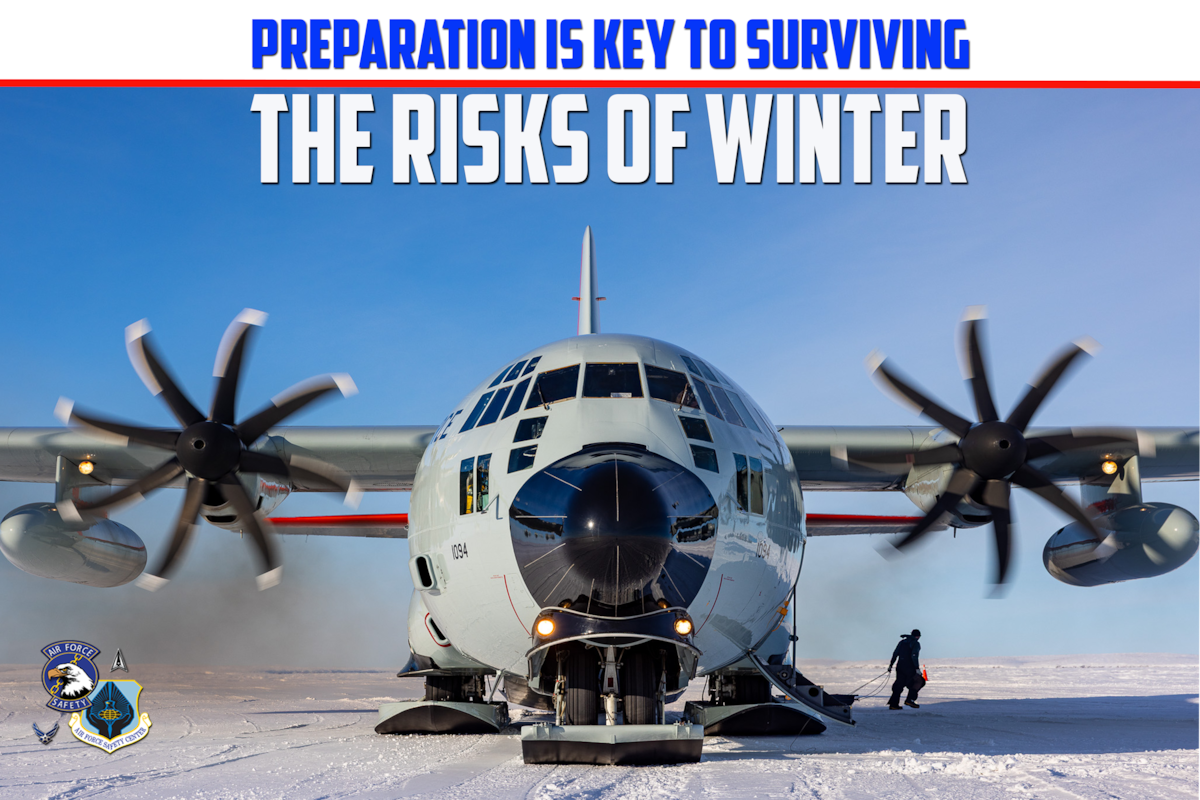 Plane on a snow-covered tarmac with member working.
 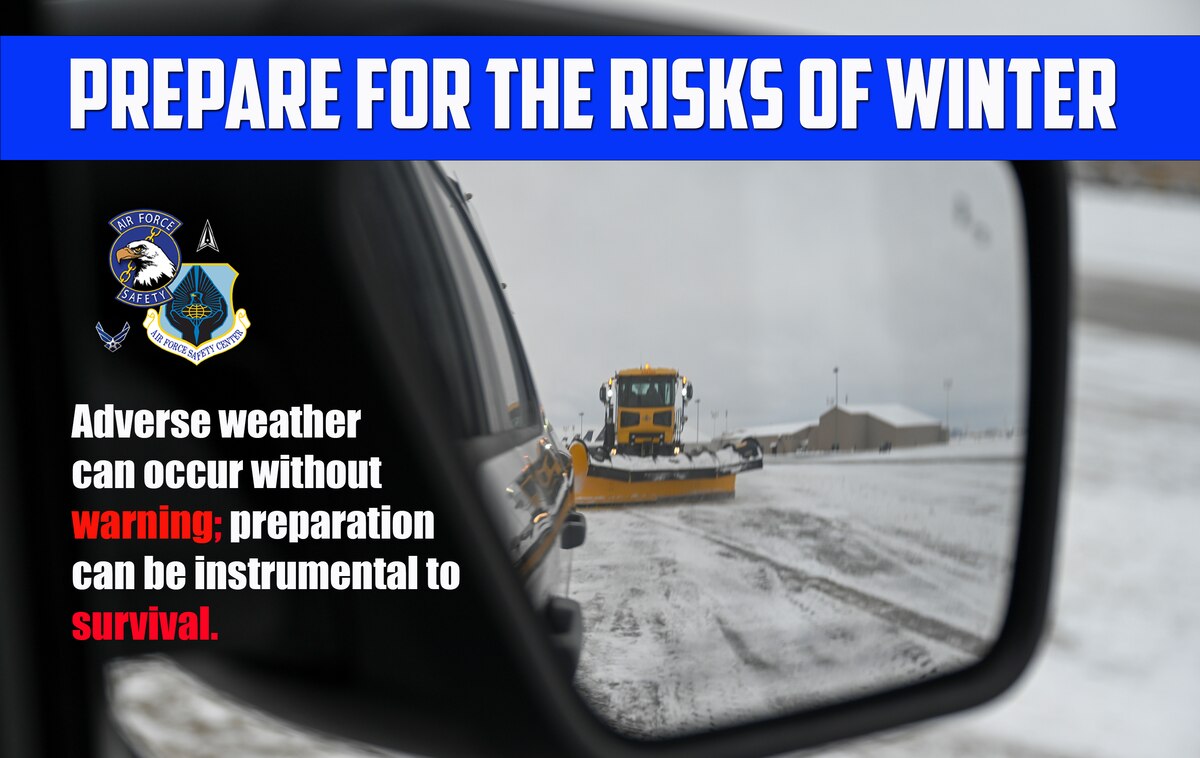 Snowplow in rearview mirror clearing streets.