Deb Henley, 505th Command and Control Wing Public Affairs
The 2025 series of the Decision Advantage Sprint for Human-Machine Teaming marked a significant step forward in the integration of artificial intelligence and machine learning into battle management operations. Through a series of groundbreaking experiments, including the recent DASH 3 iteration, the U.S. Air Force, alongside its coalition partners, Canada and the United Kingdom, tested and refined AI’s potential to enhance decision-making, improve operational efficiency, and strengthen interoperability in the face of growing global security challenges.
Held at the unclassified location of the Shadow Operations Center-Nellis in downtown Las Vegas, DASH 3 set the stage for this collaboration, led by the Advanced Battle Management System Cross-Functional Team. The experiment was executed in partnership with the Air Force Research Lab’s 711th Human Performance Wing, U.S. Space Force, and the 805th Combat Training Squadron, also known as the ShOC-N, further solidifying the commitment to advancing battle management capabilities for the future.
AI Integration into Operational Decision-Making
In the third iteration of the DASH series seven teams, six from industry teams and one from the ShOC-N innovation team partnered with U.S., Canadian, and U.K. operators to test a range of decision advantage tools aimed at enhancing the rapid and effective generation of battle course of actions with multiple paths. The goal of a Battle COA is to map sequences of actions that align with the commander’s intent while overcoming the complexities of modern warfare, including the fog and friction of battle. Examples of Battle COAs include recommended solutions for long-range kill chains, electromagnetic battle management problems, space and cyber challenges, or agile combat employment such as re-basing aircraft.
U.S. Air Force Col. John Ohlund, ABMS Cross Functional Team lead overseeing capability development, explained the importance of flexibility in COA generation: “For example, a bomber may be able to attack from multiple avenues of approach, each presenting unique risks and requires different supporting assets such as cyber, ISR [intelligence, surveillance, and reconnaissance], refueling, and air defense suppression. Machines can generate multiple paths, supporting assets, compounding uncertainties, timing, and more. Machines provide a rich solution space where many COAs are explored, but only some are executed, ensuring options remain open as the situation develops.”
This ability to explore multiple COAs simultaneously allows for faster adaptation to unforeseen challenges and provides operators with diverse strategies to act upon as the situation unfolds. AI’s integration into this process aims to not only speed up the decision-making cycle but also increase the quality of the solutions generated.
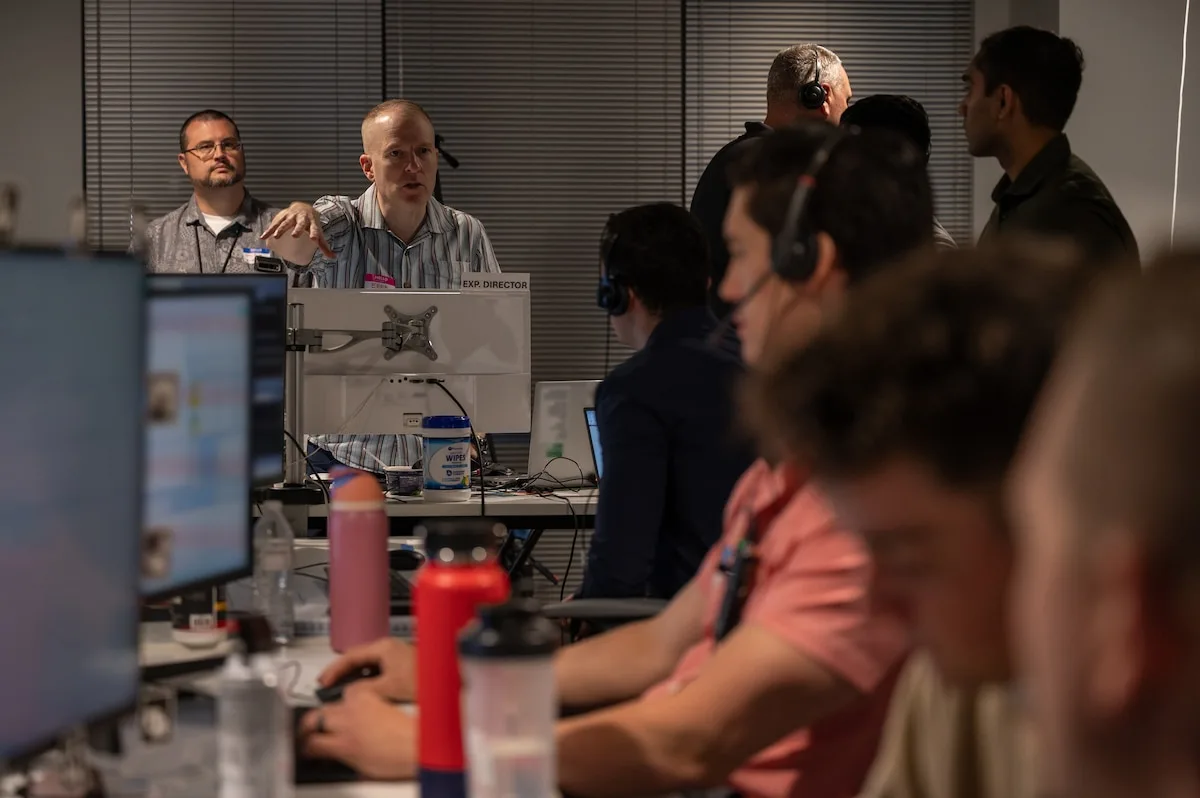
 U.S. Air Force Col. Jonathan Zall, Advanced Battle Management System Capability Integration chief, directs Airmen and industry partners during the Department of the Air Force’s third ABMS Cross-Functional Team Decision Advantage Sprint for Human-Machine Teaming, or DASH, experiment in Las Vegas, Nevada, Sept. 24, 2025. The two-week sprint demonstrated how human-machine teaming can reduce decision-making timelines, generate more solutions under pressure and chart a repeatable path for future command and control capability development. (U.S. Air Force photo by Airman 1st Class Jennifer Nesbitt) (Computer screens and computer information label blurred for security purposes.)
  U.S. Air Force Col. John Ohlund, Advanced Battle Management System Cross-Functional Team (ABMS CFT) director, briefs Airmen and industry partners during the Department of the Air Force’s third ABMS CFT Decision Advantage Sprint for Human-Machine Teaming, or DASH, experiment in Las Vegas, Nevada, Sept. 24, 2025. The event brought together operational warfighters and Shadow Operations Center-Nellis software developers to prototype microservices designed to accelerate and improve decision-making in high-tempo battle management scenarios shaped by the Transformational Model. (Computer display blurred for security reasons) (U.S. Air Force photo by Airman 1st Class Jennifer Nesbitt) (Computer screen blurred for security purposes.)
  U.S. Airmen and industry partners test software during the Department of the Air Force’s third Advanced Battle Management System Cross-Functional Team Decision Advantage Sprint for Human-Machine Teaming, or DASH, experiment in Las Vegas, Nevada, Sept. 24, 2025. By demonstrating how human-machine teams can reduce decision time and expand options for battle managers, DASH set the foundation for the Air Force’s next generation of command and control. (U.S. Air Force photo by Airman 1st Class Jennifer Nesbitt) (Paper blurred for security purposes.)
 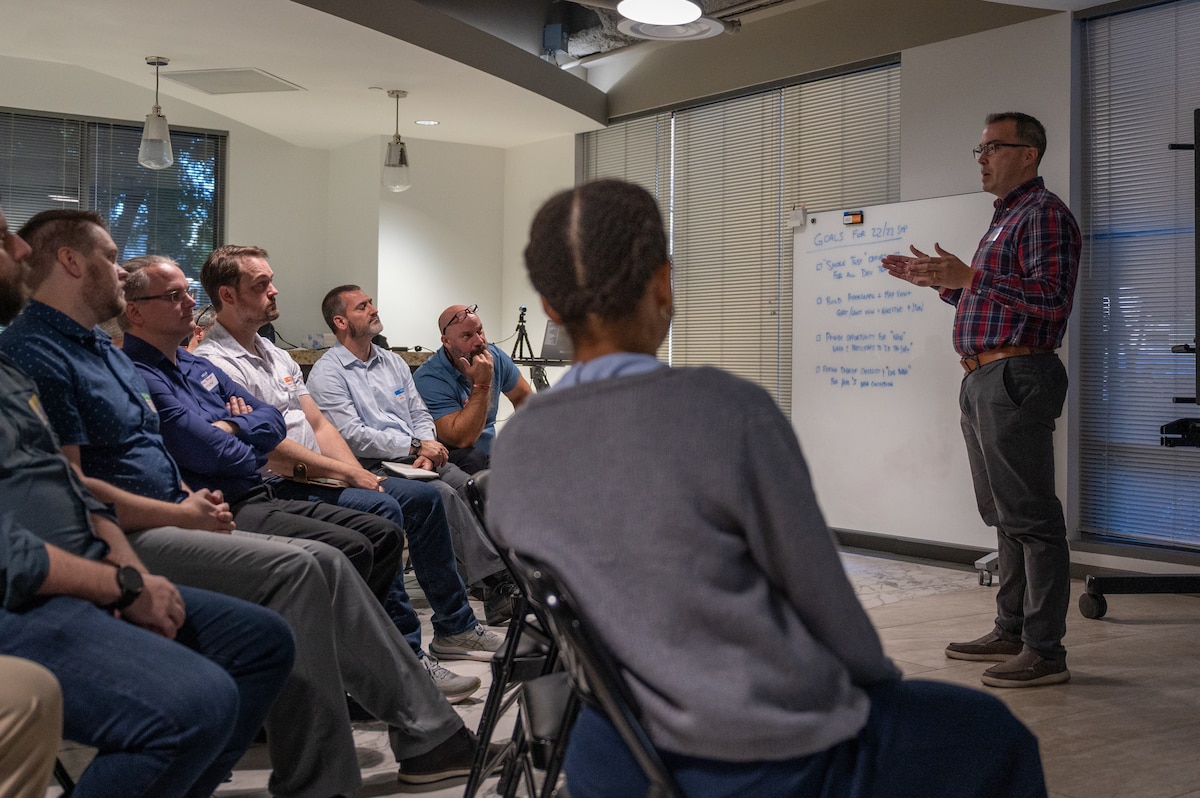 U.S. Air Force Col. John Ohlund, Advanced Battle Management System Cross-Functional Team (ABMS CFT) director, briefs Airmen and industry partners during the Department of the Air Force’s third ABMS CFT third Decision Advantage Sprint for Human-Machine Teaming, or DASH, experiment in Las Vegas, Nevada, Sept. 24, 2025. The event brought together operational warfighters and Shadow Operations Center-Nellis and industry software developers to prototype microservices designed to accelerate and improve decision-making in high-tempo battle management scenarios framed by the Transformational Model. (U.S. Air Force photo by Airman 1st Class Jennifer Nesbitt)
 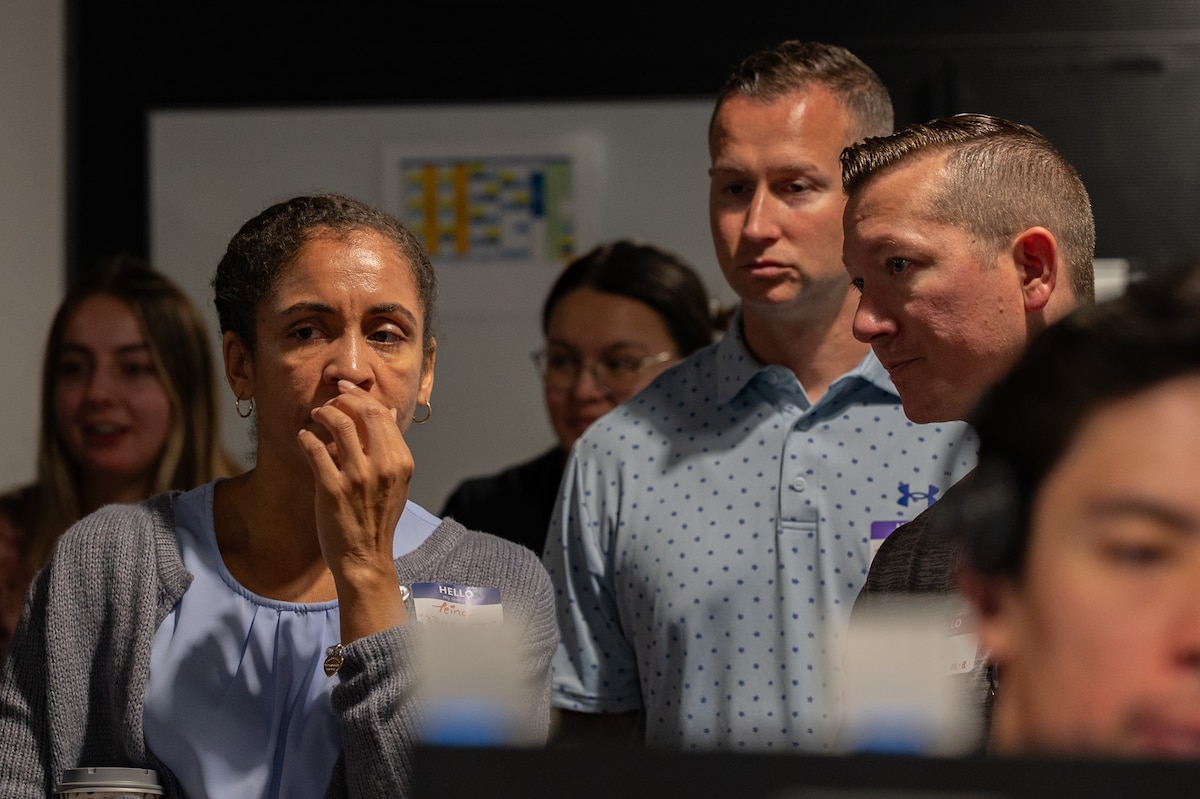 U.S. Airmen and industry partners observe data compilation during the Department of the Air Force’s third Advanced Battle Management System Cross-Functional Team third Decision Advantage Sprint for Human-Machine Teaming, or DASH, experiment in Las Vegas, Nevada, Sept. 24, 2025. The two-week software sprint demonstrated how human-machine teaming can reduce decision-making timelines, generate more solutions under pressure and chart a repeatable path for future command and control capability development. (U.S. Air Force photo by Airman 1st Class Jennifer Nesbitt) (This image was cropped to emphasize subjects.) U.S. Air Force Col. John Ohlund, Advanced Battle Management System Cross-Functional Team (ABMS CFT) director, briefs Airmen and industry partners during the Department of the Air Force’s third ABMS CFT Decision Advantage Sprint for Human-Machine Teaming, or DASH, experiment in Las Vegas, Nevada, Sept. 24, 2025. The event brought together operational warfighters and Shadow Operations Center-Nellis software developers to prototype microservices designed to accelerate and improve decision-making in high-tempo battle management scenarios shaped by the Transformational Model. (Computer display blurred for security reasons) (U.S. Air Force photo by Airman 1st Class Jennifer Nesbitt) (Computer screen blurred for security purposes.) U.S. Air Force Col. Jonathan Zall, Advanced Battle Management System Capability Integration chief, directs Airmen and industry partners during the Department of the Air Force’s third ABMS Cross-Functional Team Decision Advantage Sprint for Human-Machine Teaming, or DASH, experiment in Las Vegas, Nevada, Sept. 24, 2025. The two-week sprint demonstrated how human-machine teaming can reduce decision-making timelines, generate more solutions under pressure and chart a repeatable path for future command and control capability development. (U.S. Air Force photo by Airman 1st Class Jennifer Nesbitt) (Computer screens and computer information label blurred for security purposes.)
 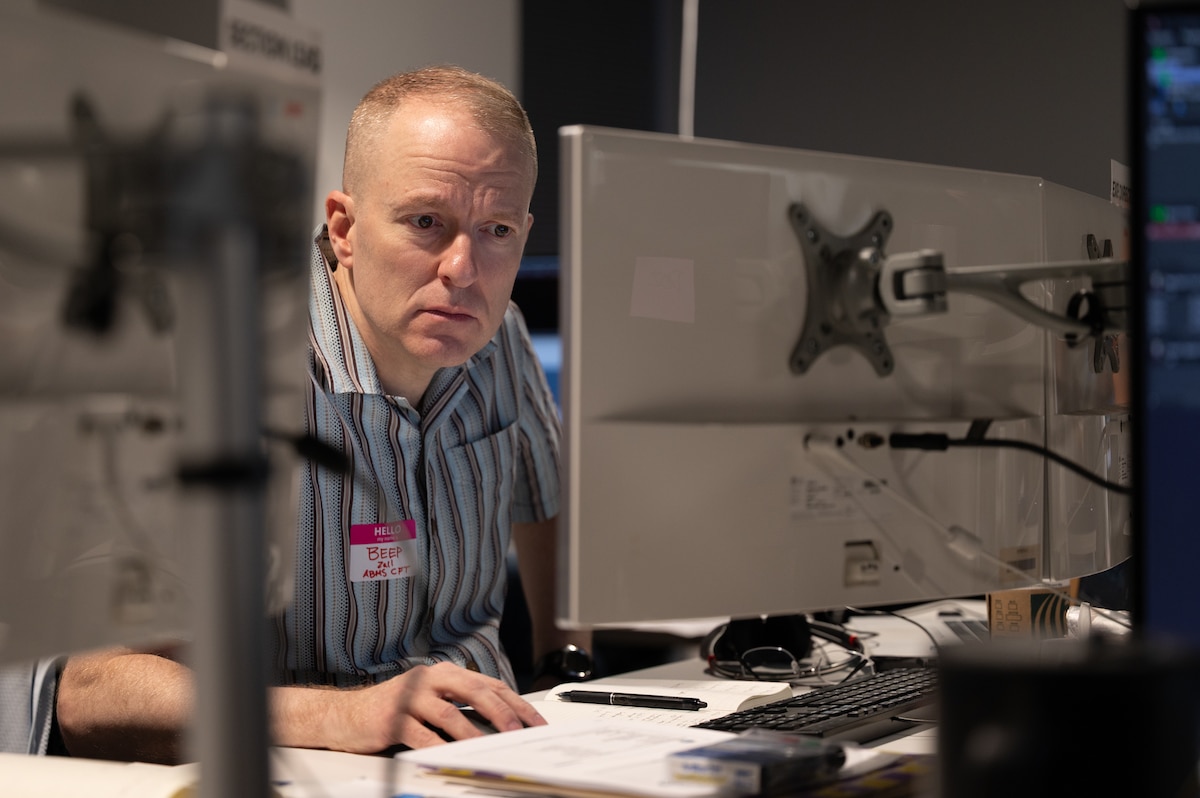 U.S. Air Force Col. Jonathan Zall, Advanced Battle Management System Capability Integration chief, participates in the Department of the Air Force’s third Advanced Battle Management System Cross-Functional Team Decision Advantage Sprint for Human-Machine Teaming, or DASH, experiment in Las Vegas, Nevada, Sept. 24, 2025. The event brought together operational warfighters and industry and Shadow Operations Center-Nellis software developers to prototype microservices designed to accelerate and improve decision-making in high-tempo battle management scenarios framed by the Transformational Model. (U.S. Air Force photo by Airman 1st Class Jennifer Nesbitt)
 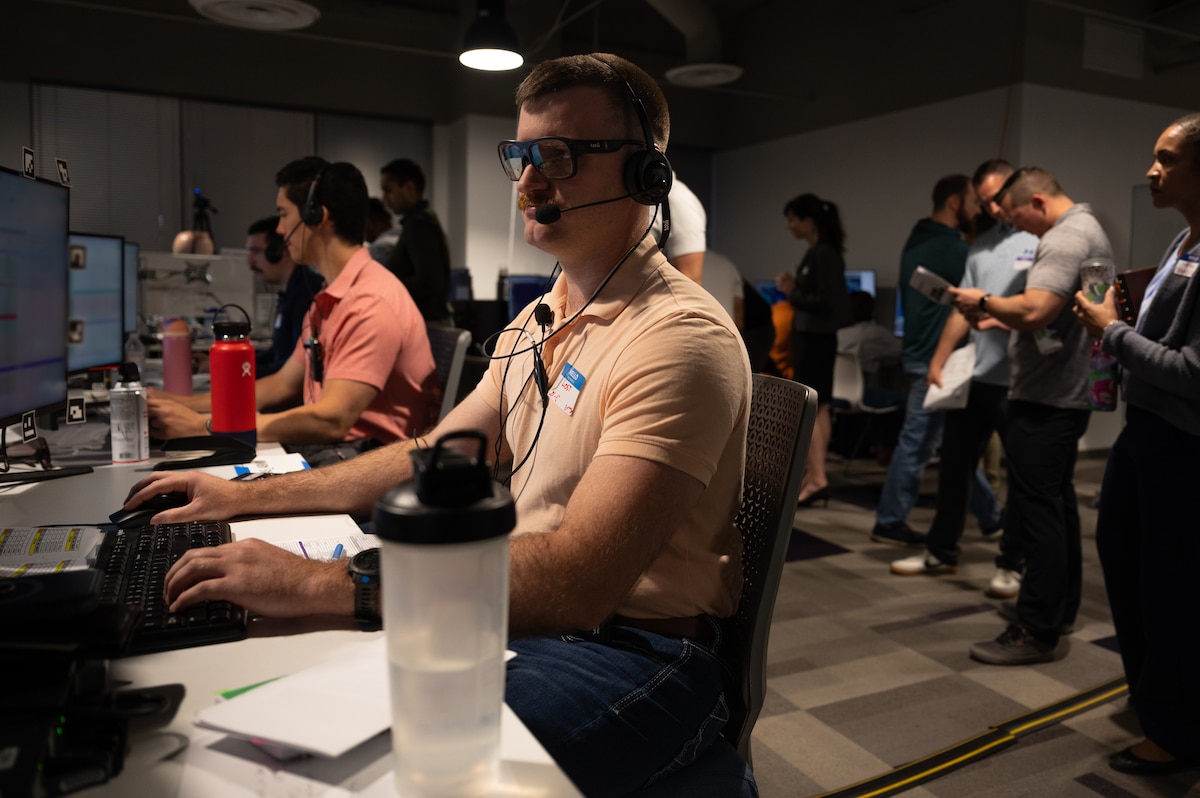 U.S. Airmen and industry partners compile data during the Department of the Air Force’s third Advanced Battle Management System Cross-Functional Team third Decision Advantage Sprint for Human-Machine Teaming, or DASH, experiment in Las Vegas, Nevada, Sept. 24, 2025. The event brought together operational warfighters and Shadow Operations Center-Nellis and industry software developers to prototype microservices designed to accelerate and improve decision-making in high-tempo battle management scenarios shaped by the Transformational Model. (U.S. Air Force photo by Airman 1st Class Jennifer Nesbitt) (Computer screens blurred for security purposes.)
 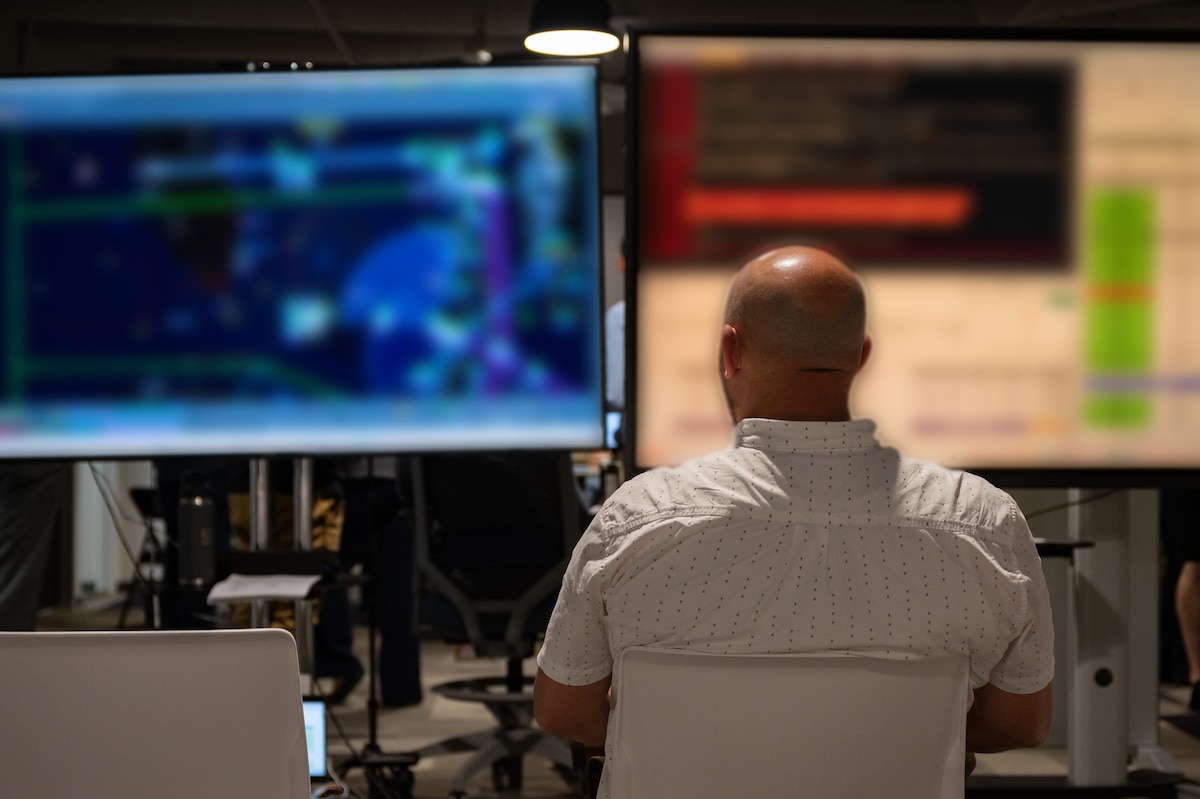 A participant in the Department of the Air Force’s third Advanced Battle Management System Cross-Functional Team Decision Advantage Sprint for Human-Machine Teaming, or DASH, experiment observes data compilation in Las Vegas, Nevada, Sept. 24, 2025. By demonstrating how human-machine teams can reduce decision timelines and expand options for battle managers, DASH set the foundation for the Air Force’s next generation of command and control. (U.S. Air Force photo by Airman 1st Class Jennifer Nesbitt) (Computer screens blurred for security purposes.) U.S. Airmen and industry partners test software during the Department of the Air Force’s third Advanced Battle Management System Cross-Functional Team Decision Advantage Sprint for Human-Machine Teaming, or DASH, experiment in Las Vegas, Nevada, Sept. 24, 2025. By demonstrating how human-machine teams can reduce decision time and expand options for battle managers, DASH set the foundation for the Air Force’s next generation of command and control. (U.S. Air Force photo by Airman 1st Class Jennifer Nesbitt) (Paper blurred for security purposes.) U.S. Air Force Col. John Ohlund, Advanced Battle Management System Cross-Functional Team (ABMS CFT) director, briefs Airmen and industry partners during the Department of the Air Force’s third ABMS CFT third Decision Advantage Sprint for Human-Machine Teaming, or DASH, experiment in Las Vegas, Nevada, Sept. 24, 2025. The event brought together operational warfighters and Shadow Operations Center-Nellis and industry software developers to prototype microservices designed to accelerate and improve decision-making in high-tempo battle management scenarios framed by the Transformational Model. (U.S. Air Force photo by Airman 1st Class Jennifer Nesbitt)